The U.S. Fisheries Insurance Gap
By Tori Yanco
Hurricanes, earthquakes, severe storms, wildfires, droughts, heatwaves, and floods: these are the natural hazards that define U.S. disaster finance and recovery infrastructure. These hazards also make up the bulk of accounting for natural hazard induced economic and social losses. Marine hazards — including marine heatwaves, harmful algal blooms, and hypoxia — are often left out of loss accounting and disaster risk finance and resilience frameworks. While these hazards do not interrupt daily life for most Americans, they cause widespread damages for a particularly important aspect of our economic system: marine food supply.
Our food system provides critical resources for human well-being, while simultaneously anchoring a substantial share of economic activity; in the U.S., agriculture, food, and related industries contribute 5.5% to U.S. gross domestic product (USDA, 2026). The U.S. seafood industry is a small, but important, piece of this system. Domestic seafood production alone (excluding and the value add of seafood importers) supports 515,000 jobs, produces $47.6 billion in sales, and $17.4 billion in income (NOAA National Marine Fisheries Service, 2026). The economic benefits derived from seafood production are highly concentrated in coastal communities, where a small number of ports and working waterfronts account for a disproportionate share of landings and employment, and where the marine economy can account for a large share of the local tax base. In King Cove, Alaska, for example, the closure of a single seafood processing plant was estimated to reduce community revenue by 70%, forcing the community to delay projects because the facility was also a major purchaser of local power and water and supported solid-waste services (GAO, 2025).
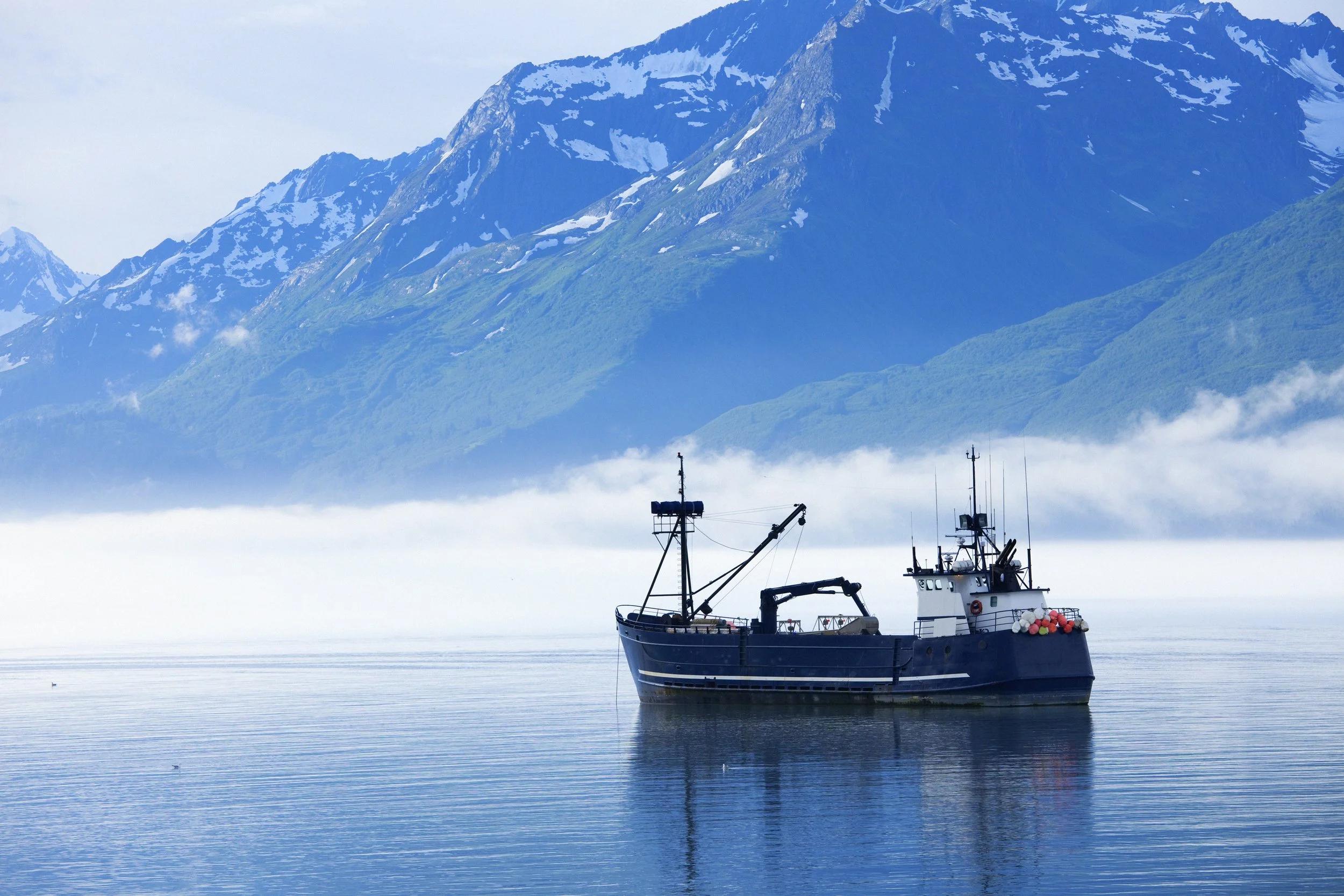
Large fishing boat anchored in Valdez, Alaska bay with the Chugach Mountains in background. Photo: iStock.com/dhughes9
Ocean Hazards and Seafood Industry Impacts
Beyond provisioning resources for human consumption, the Earth’s oceans play a major role in maintaining our global energy system balance. Since 1971, our oceans have absorbed 91% of the excess heat trapped in the earth system created by human-caused greenhouse gas emissions (IPCC AR6, Ch.7). Absorbing all this excess heat has caused the rate of ocean warming to quadruple over the past four decades (Merchant et al., 2025), and the incidence of Marine Heatwave Events (MHWs) — defined as prolonged periods of anomalously high sea surface temperatures — to double (Oliver et al., 2018). These changes have direct impacts on the seafood industry, causing mass mortality events amongst fish and shellfish that can reduce fishery output, or result in fishery closure altogether (Fedewa et al. 2025). Impacts from these events are widespread globally - since 1985, marine heatwaves have created $6.6 billion (USD 2005) in economic losses across global fisheries, with over 40% of these damages occurring in the last decade alone (Yanez-Arenas et al. 2025). The Bering Sea snow crab fishery — valued at approximately $227 million per year — suffered one of the most severe marine heatwave induced mortality events on record, causing 90% of the snow crab population to collapse (NOAA, 2024; Szuwalski et al., 2023). As a result, the Bering Sea snow crab fishery was forced to close across two full seasons for the first time in history, from 2022-2024 (Szuwalski et al., 2023).
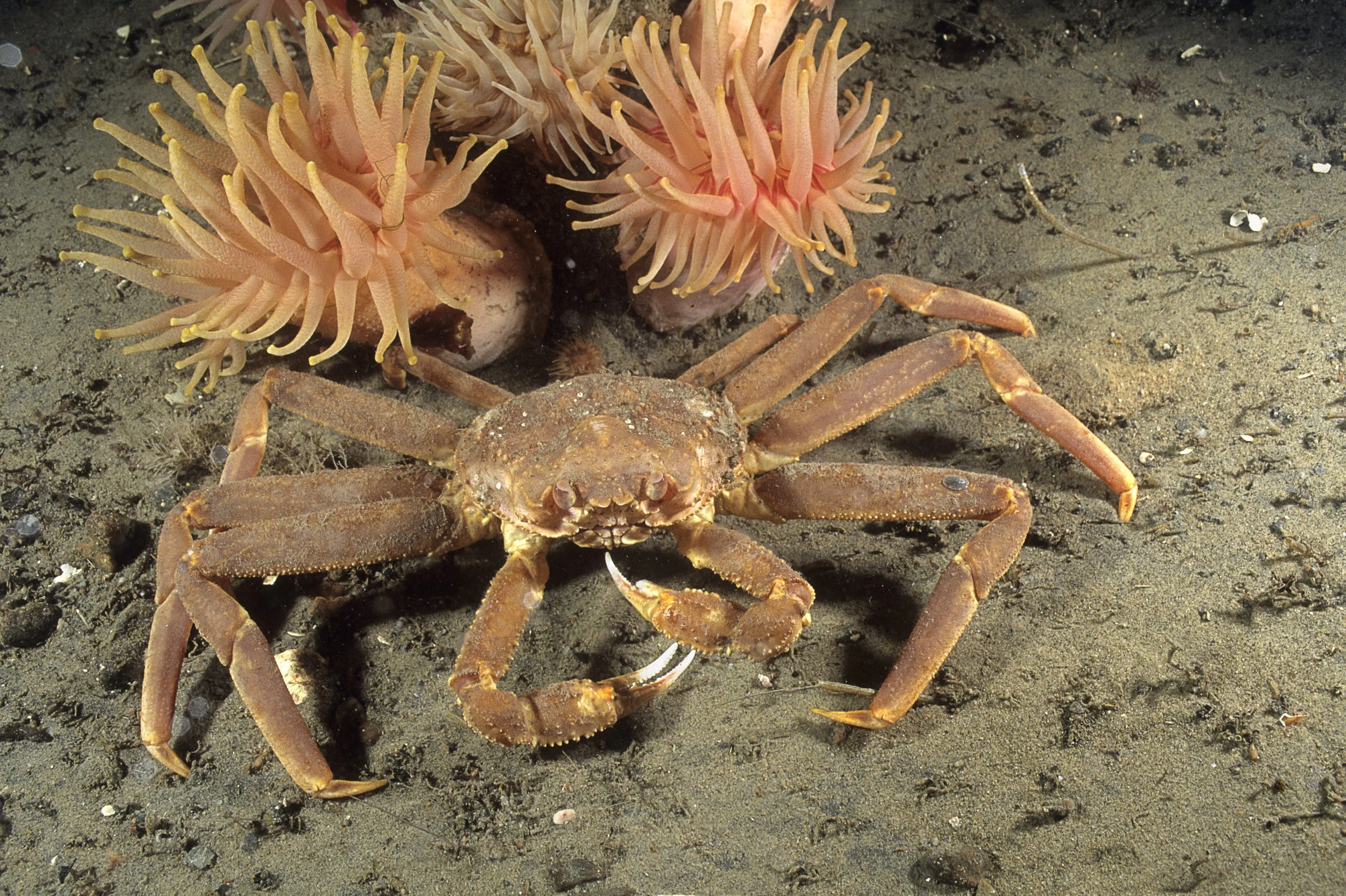
A snow crab in the wild. Photo: iStock.com/LaSalle-Photo
Harmful algal blooms (HABS) are another category of marine hazard that can cause fishery yields to drop and result in large scale economic losses. These blooms occur when macro- or microalgae colonies grow out of control and overwhelm an environmental system (Moore et al., 2019; NOAA 2016). Sometimes, the algae produce toxins that bioaccumulate in fish and shellfish, which can then be transferred up the food chain to humans, creating a significant threat to seafood safety and human health (Moore et al., 2019). When toxin levels exceed regulatory limits for human consumption, fisheries closures are enacted to prevent harvesting. Like marine heatwave-driven population declines, HAB-related fishery closures can create significant economic and social disruptions for dependent coastal communities.
In 2015, unusually warm ocean conditions associated with the Northeast Pacific marine heatwave known as “the Blob” contributed to the largest harmful algal bloom recorded along the U.S. West Coast at the time (NOAA, 2016). Stretching from central California to British Columbia and the Alaska Peninsula, “the blob” caused widespread and long term closures across commercial and recreational fishing sectors in the Western U.S., including the lucrative Dungeness Crab commercial fishery which experienced $97.5 million in revenue loss between 2014-2015 (Moore et al., 2020; NOAA, 2026).
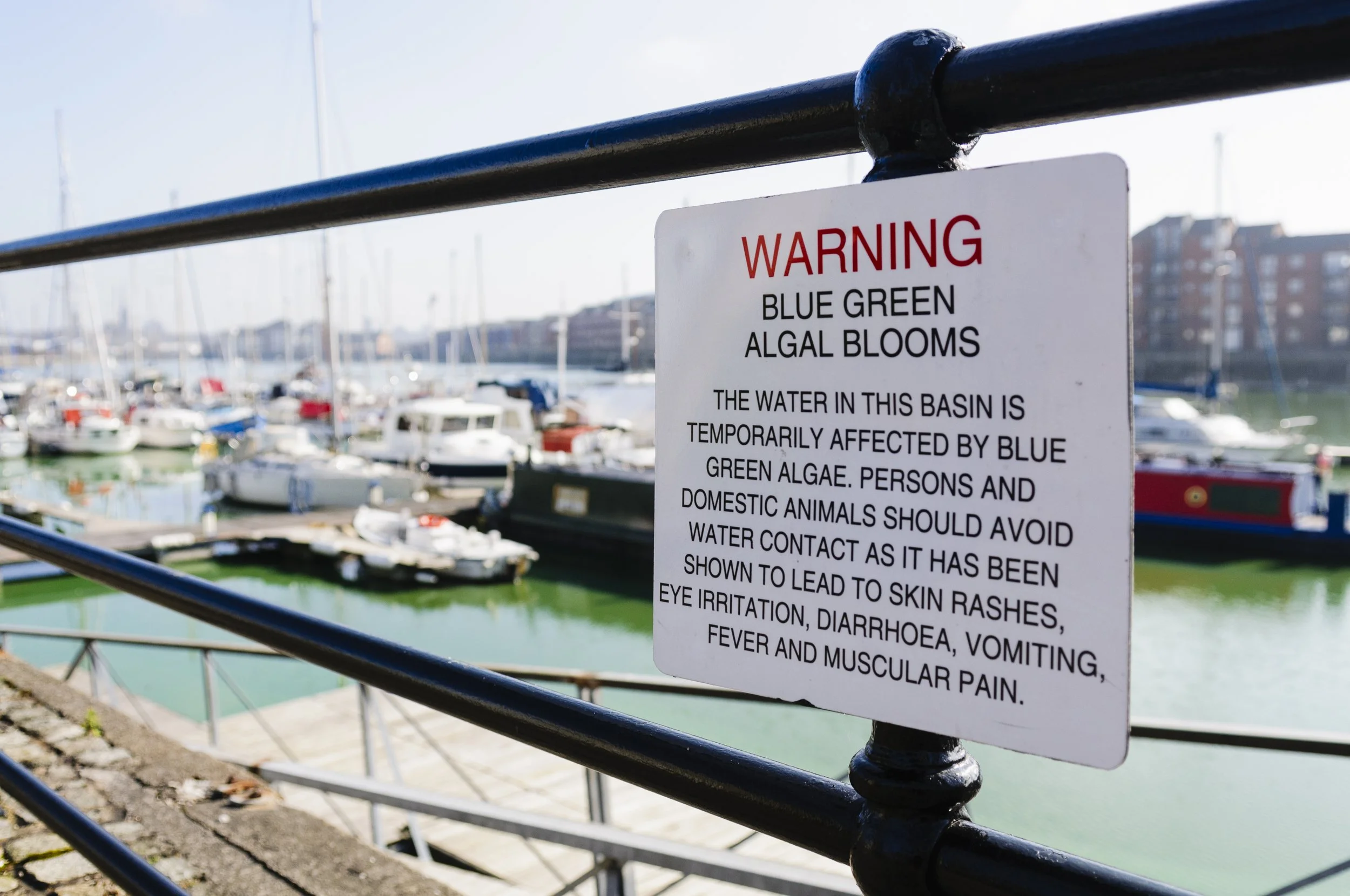
Sign at a marina warning the public about the dangers of Blue-Green algae. Photo: iStock.com/Stephen Barnes
Disaster Finance for Fisheries: Insurance is Critically Missing
Despite their contributions to economic productivity, employment, and food security, U.S. fishers have historically had far less access to insurance than their farmer counterparts. American farmers benefit from a suite of programs to help them mitigate production and price risk, including federally subsidized crop insurance, commodity support programs, and disaster assistance (USDA, 2025). Comparatively, U.S. fisheries primarily rely on federal disaster declarations and funding appropriations administered by NOAA’s National Marine Fisheries Service (NMFS) to cover losses caused by extreme events. Once a disaster strikes, the process for fishers and impacted communities to receive funds is complex and drawn out. To receive aid, an affected fishery must request federal support, document significant 12-month revenue or subsistence losses, receive federal approval, and develop a spending plan for any allocated funds (GAO, 2025). A recent U.S Government Accountability Office (GAO) study found that NMFS took a median of 3.4 years to disburse funds to impacted fisheries once a request for aid had been submitted, and that fisheries could wait as long as 4.8 years to receive payments (GAO, 2025). This is in addition to the time between the loss causing event and when the request for aid was submitted. Federal fisheries disaster relief is also not guaranteed for impacted communities — over the last 30 years, fisheries disasters have cost over $5 billion, but only $2 billion in federal funds have been allocated (UCSB, EMLab).
Fisheries have no federal insurance program to provide faster relief than this drawn out aid system. While the Federal Crop Insurance Program remains imperfect, it provides farmers with pre-arranged financial protection that can be activated immediately following a loss. Under the Federal Crop Insurance Program, producers are generally required to notify their insurer within 72 hours of discovering damage, after which losses can be assessed and payments made (USDA RMA, 2026).
Divergent Paths: Agriculture Insurance and Fisheries Disaster Relief
Understanding why U.S. fisheries have far less access to insurance than their terrestrial agricultural counterparts requires looking at the different historical, institutional, and structural pathways through which risk management developed across the two sectors. While both are food-producing industries, they are managed by separate federal agencies: wild-capture marine fisheries, including finfish, crustaceans, and mollusks, are primarily managed by NOAA Fisheries under the Department of Commerce, while crops are managed by the U.S. Department of Agriculture (USDA). The agencies have prioritized different risk management approaches for the respective industries and resources they oversee, putting crops and fish on divergent disaster finance trajectories.
Federal crop insurance traces its roots to the Dust Bowl, when experimental “all-risk” crop insurance policies piloted by small commercial insurers across the mid-west were institutionalized by the U.S Government in 1938 (Wantoch, N.D.). Between 1940 and 1980, crop insurance remained limited, with low uptake as farmers continued to rely primarily on federal disaster aid (USDA, N.D.). By the 1960s and 70s, repeated disaster appropriations had become increasingly costly, prompting Congress to introduce crop insurance premium subsidies through the 1980 Federal Crop Insurance Act. Through additional subsidies, expanded products, and eligibility requirements tied to other aid programs, Congress substantially increased insurance uptake through the 1990s and 2000s. These measures have shifted farmers' reliance away from costly and unreliable sources of disaster aid to an organized risk transfer system.
Today the Federal Crop Insurance Program operates through a complex public-private architecture where private insurers sell and service policies, and the federal government subsidizes, regulates, and reinsures them. The USDA Risk Management Agency (RMA) sits at the top of the institutional hierarchy. The role of RMA is to ensure the “crop insurance program is adaptive, effective, and actuarially sound”, while overseeing the development of new insurance products and compliance (USDA, 2021). To participate in the crop insurance market with the federal government, private insurers must prove they have the required financial, operational, and technical skills to become one of USDA’s Approved Insurance Providers (AIPs) (USDA, 2021). AIPs underwrite and service federal crop insurance policies, which are sold to farmers through a network of private, and often independent, insurance agents authorized by participating insurers.
This history and complex infrastructure makes it clear that the origin story of U.S. crop insurance is not one of private market efficiency. Agriculture became insurable at scale because the federal government subsidizes costs at scale. As of 2024, farmers only pay approximately 38% of their policy premiums (USDA, 2026). Additionally, the USDA Risk Management Agency backs private insurer involvement by subsidizing insurer administrative costs, and sharing underwriting risk. The success of this public-private model has attracted substantial global private capital: two of the largest participants in the U.S. crop insurance market are ultimately owned by Australia-based QBE Insurance Group and Japan-based Sompo Holdings (Cueto, 2025).
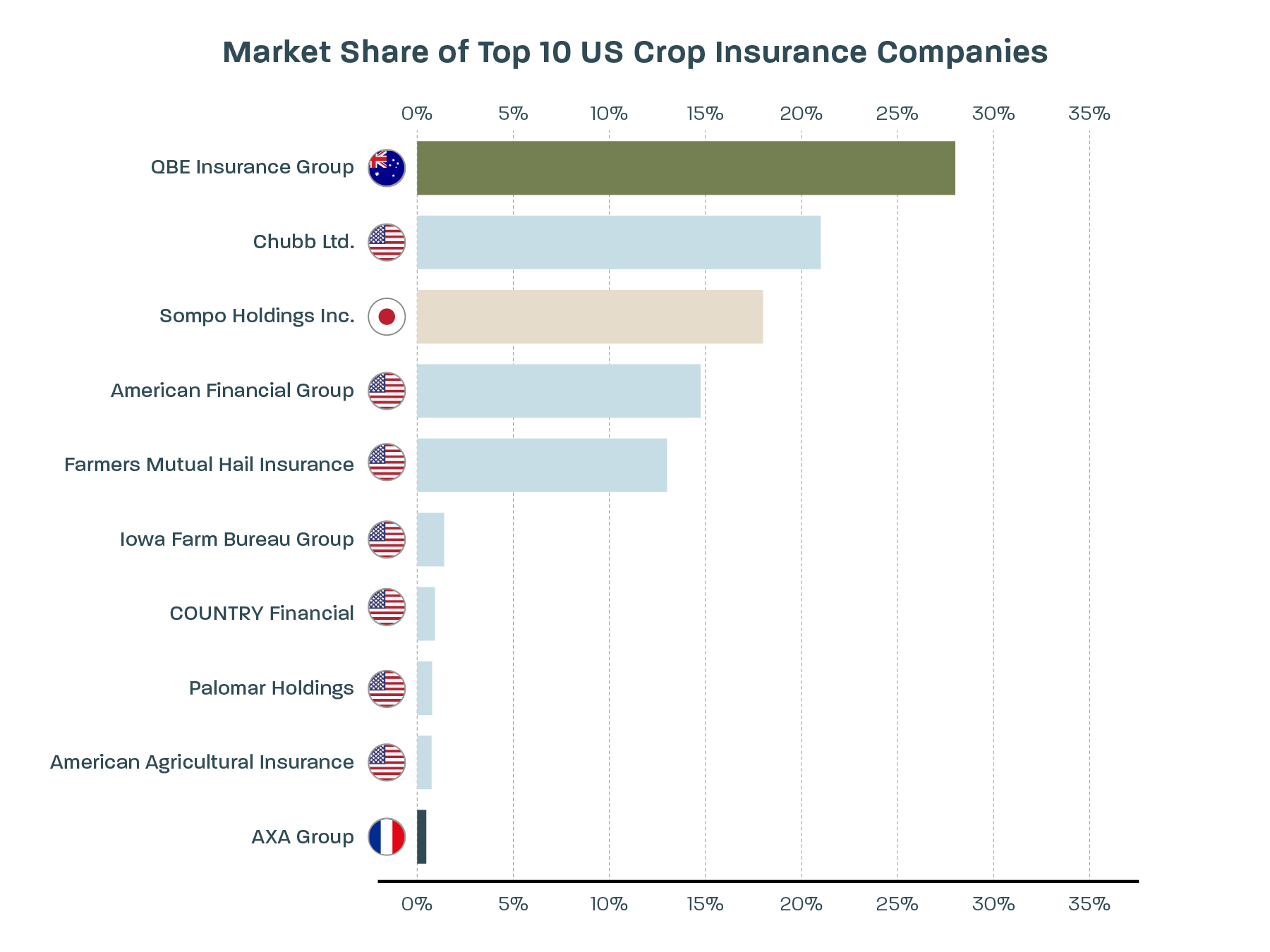
Figure 1 | Source: Insurance Business, 2025
The federal crop insurance program is now an integral part of U.S agriculture, covering 561 million acres of U.S farmland, but it still leaves gaps for small, diversified, and specialty-crop producers and continues to face questions about how well it supports adaptation to changing climate risks (USDA, 2026). While USDA prioritized institutionalizing a system where disaster losses are covered by pre-arranged risk transfer in partnership with private insurers, fisheries policy historically focused on resource management and ad-hoc disaster aid. As USDA and Congress were creating the institutional infrastructure to support and mainstream federal crop insurance, NOAA and the Department of Commerce crafted similarly complex fisheries management practices to sustainably manage wild fish stock and prevent overfishing. By the 1980s, however, policymakers also had to address disasters that resource management alone could not prevent. The Magnuson-Stevens Act of 1976 established the foundational clauses for determining whether a fishery has suffered a disaster, while the Interjurisdictional Fisheries Act of 1986 enabled the Secretary of Commerce to declare a commercial fishery failure and provide assistance (Marshak, 2020). The first major disaster determinations, however, were not issued until 1994 after the collapse of the New England multispecies groundfish fishery, which received $30 million in appropriations (NOAA Fisheries, ND). Today after 173 submitted fisheries disaster determinations, ad-hoc disaster relief has been institutionalized as the primary strategy for fisheries disaster risk management (NOAA Fisheries, ND).
The current fisheries insurance gap is the product of risk management and policy decisions compounding over time, rather than a lack of private market interest. As in agriculture, the cost of insuring fisheries yields may result in premiums that many fishers are unwilling or unable to pay without some form of public support. Private crop insurance struggled to develop without substantial government intervention, and fisheries have yet to receive a comparable federal effort to build, subsidize, and de-risk an insurance market.
Designing Insurance for Wild Capture Fisheries
While several segments of U.S. seafood production remain underinsured, one of the most persistent protection gaps is in wild-capture fisheries, which account for the majority of federal fishery disaster determinations. Many commercial fishing operations already insure physical assets such as vessels and equipment against storms and other losses. What remains largely absent is protection against lost fishing revenue when environmental conditions reduce harvests or force fisheries to close. By contrast, federal crop insurance gives farmers access to both yield-based and revenue-based protection, providing coverage not only when production falls, but also when declines in commodity prices reduce expected farm revenue.
Certain forms of aquaculture have gradually been incorporated into USDA’s broader agricultural safety net: aquaculture became eligible for disaster assistance through the Noninsured Crop Disaster Assistance Program (NAP) beginning in 1994, while farm-raised fish were later included under the Emergency Assistance for Livestock, Honeybees, and Farm-Raised Fish Program (ELAP) in 2008. Unlike the Federal Crop Insurance Program, however, NAP and ELAP are government disaster-assistance programs rather than insurance products delivered through private insurers. In 2024, USDA introduced tailored crop insurance coverage for oyster producers through the Shellfish Crop Insurance pilot program (Bunger, 2024). USDA coverage remains concentrated in farmed and cultivated seafood, particularly shellfish. These programs do not cover wild-capture fisheries such as wild salmon, tuna, lobster, or commercial crab fisheries. This distinction leaves a substantial share of U.S. seafood production outside USDA’s insurance architecture: U.S. commercial wild capture fisheries account for 8.4 billion pounds of seafood valued at $5.1 billion, while U.S. aquaculture accounts for 688 million pounds valued at $1.3 billion (NOAA Fisheries).
In April of 2026, USDA announced their new Office of Seafood, designed to further integrate American fishermen into a variety of USDA programs (U.S. Department of Commerce, 2026). While this announcement signals growing support by the federal government for fishermen and coastal communities, closing the insurance gap for wild-capture fisheries will likely require additional product development, data, and institutional support. Aquaculture’s gradual integration into USDA programs illustrates that the closer seafood production resembles conventional farming, the more easily it fits within USDA’s existing risk-management architecture. Wild capture fisheries, however, present a fundamentally different set of insurability challenges.
One major design complication is the fact that fishermen do not own the underlying stock they are harvesting. In contrast, a farmer generally owns or controls the crop being insured, or the asset by which the product's insurable interest is designed around. Another complicating factor is that fisheries losses may arise not only from environmental hazards themselves, but also from management responses to those hazards, including fishery closures, conservation measures, and other resource-management actions. Losses therefore are not simply a function of environmental risk and its likelihood and severity, but also of complex human-controlled decision-making processes. Finally, fish stocks are shared resources that move across jurisdictional boundaries and fishing grounds, making exposure harder to define geographically than for crops tied to a specific parcel of land. While not exhaustive, the listed differences suggest that fisheries insurance will require tailored product design rather than the simple extension of existing agricultural models.
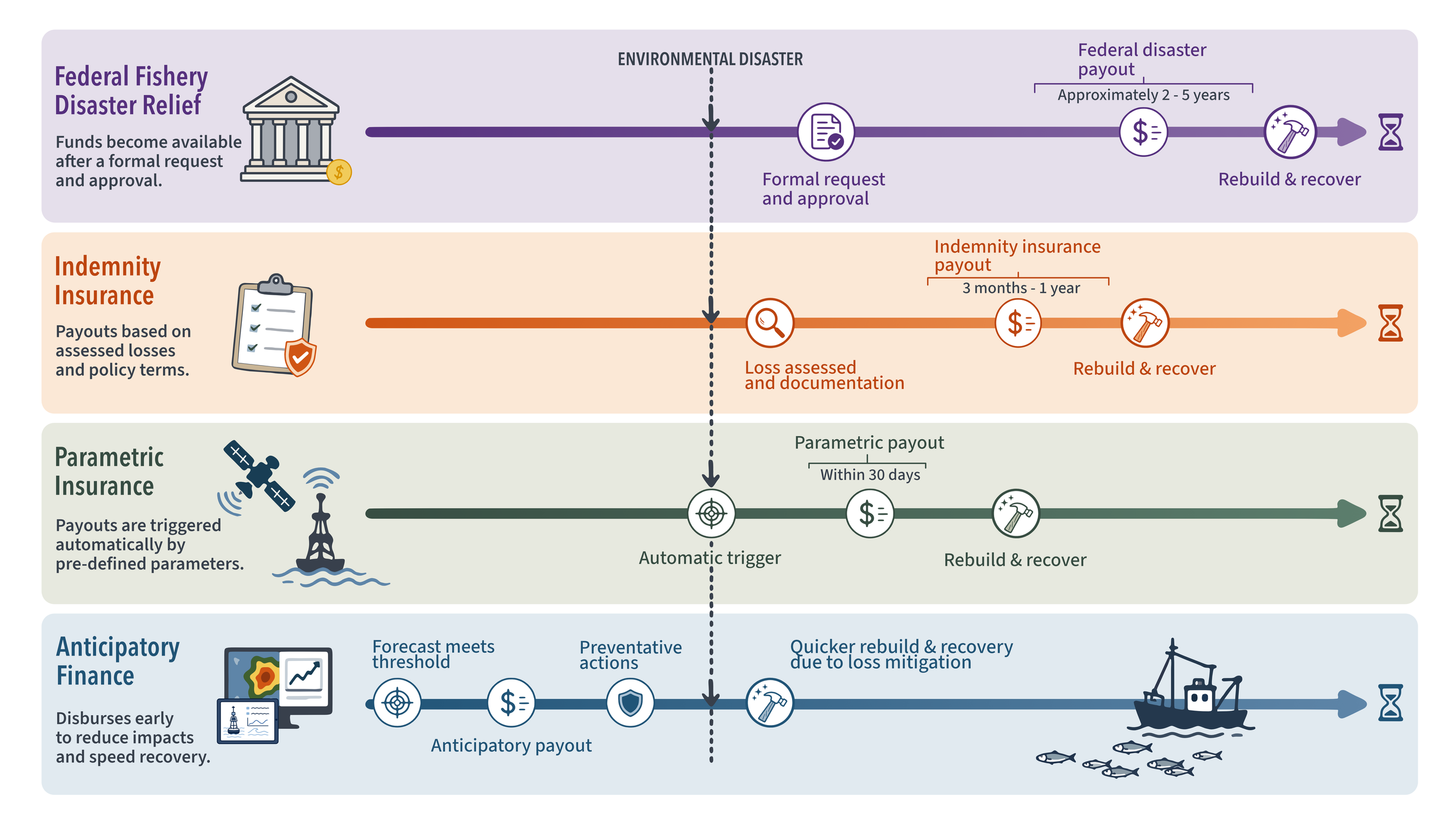
Figure 2 | Comparison of the structures and payout timelines of current and prospective risk finance mechanisms for wild capture fisheries, including indemnity, parametric, and anticipatory finance. Source: Yanco et al., 2026, manuscript under review
Groups such as the UCSB Environmental Markets Laboratory and the Ocean Modeling Forum Risk Management Research Group have made recent strides in advancing the risk modeling, trigger design, and economic analysis needed to support fisheries insurance development. In collaboration with fishing communities, they have highlighted the potential of approaches such as parametric and community-based catastrophe insurance to address the complexities of insuring wild-capture fisheries (Waite et al., 2025; Hobday et al., 2025; Watson et al., 2023). Policymakers are also increasingly interested in designing fisheries disaster insurance modeled after the federal crop insurance program (Rosen, 2025). Well designed insurance programs could not only provide valuable financial protection to a population currently underserved by insurance markets, but can also complement existing resource management and conservation efforts. By providing economic stability, insurance programs can reduce the incentive to maximize harvest when stock abundance is low or populations are under significant environmental stress (Bell et al., 2020). Further, the financial security enabled with insurance may also reduce pressure on fishers to take unsafe risks that can endanger crews, such as fishing in hazardous weather, traveling farther offshore, or delaying a return to port to avoid losing income. Building on this growing research, community, and policy momentum, expanding insurance access for fisheries could bring marine hazards more fully into U.S. disaster finance while strengthening the resilience of the coastal communities and food systems that depend on them.